All posts
Working methods
How to work with language models so that the result is good and a person still understands and owns the decision.
 AI saved someone time. It cost me several hoursAI makes writing a report faster, but someone has to check it. Why I count time savings for the whole process, not just for the author.
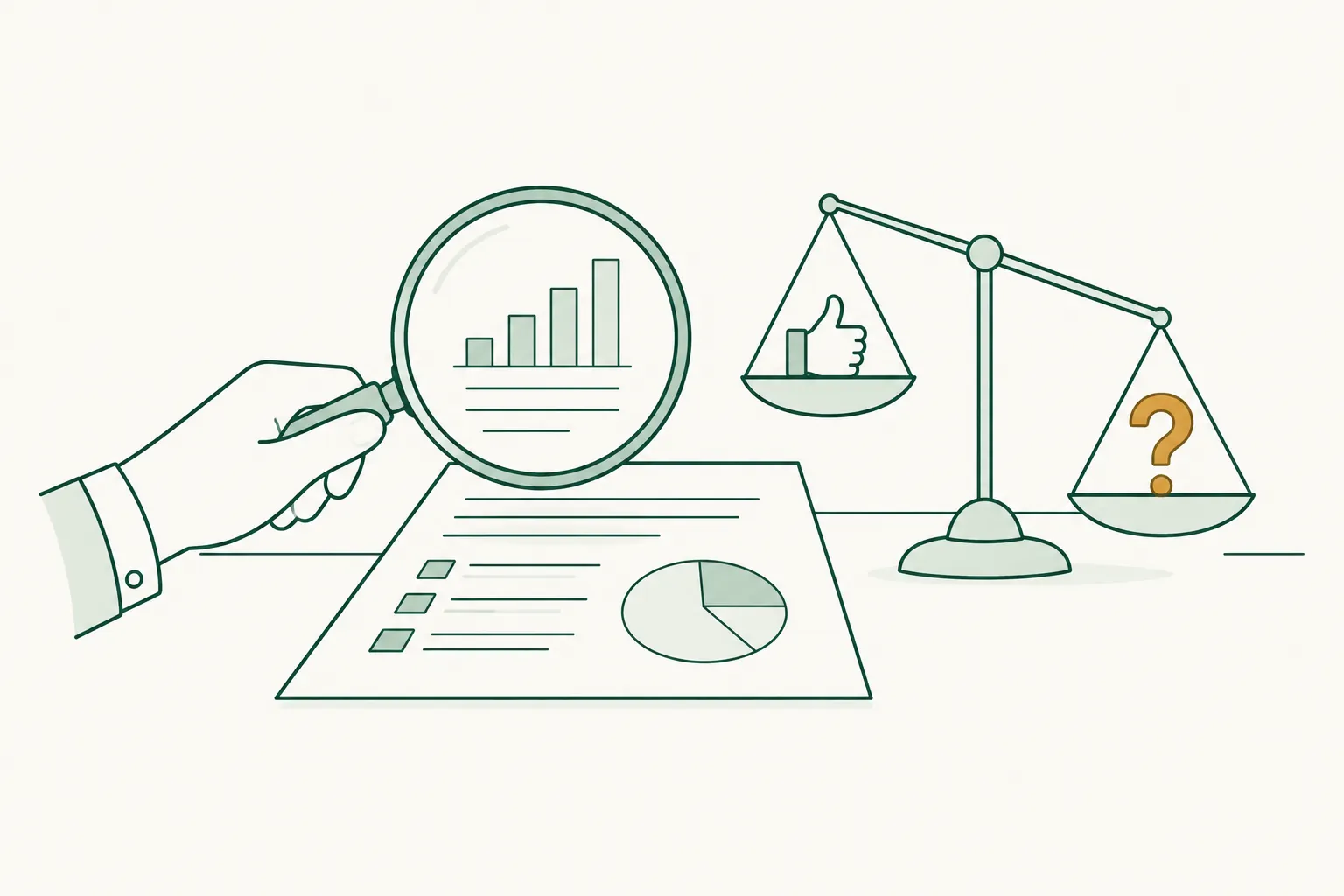 I don’t want AI to praise meIn my instructions for AI I ask for honesty instead of praise. How to write a prompt so that the model’s criticism helps you make a better decision.
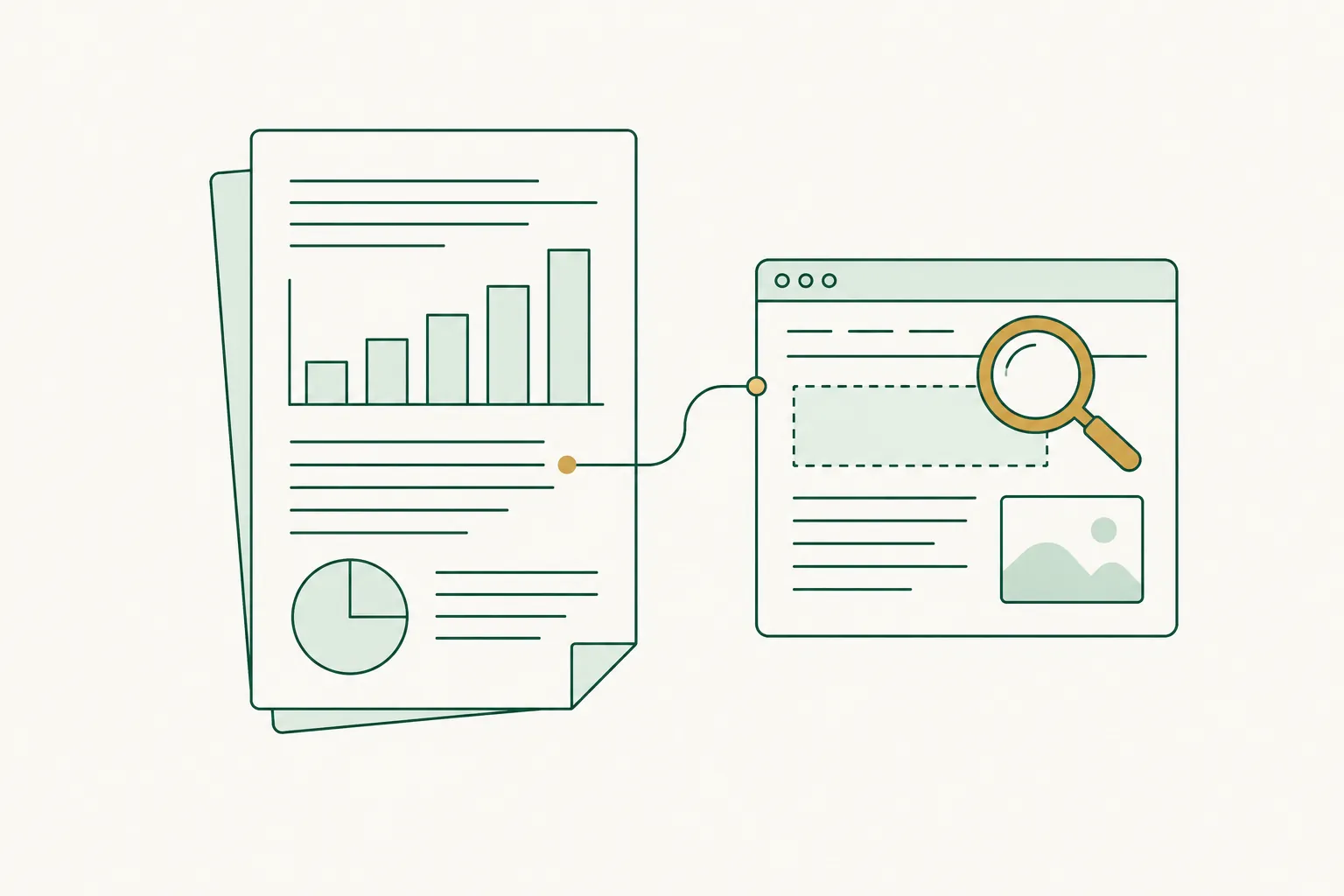 A footnote in an AI report is where checking beginsIn a Deep Research report I clicked a footnote and could not find the stated amount. Three questions I ask every footnote in an AI report.
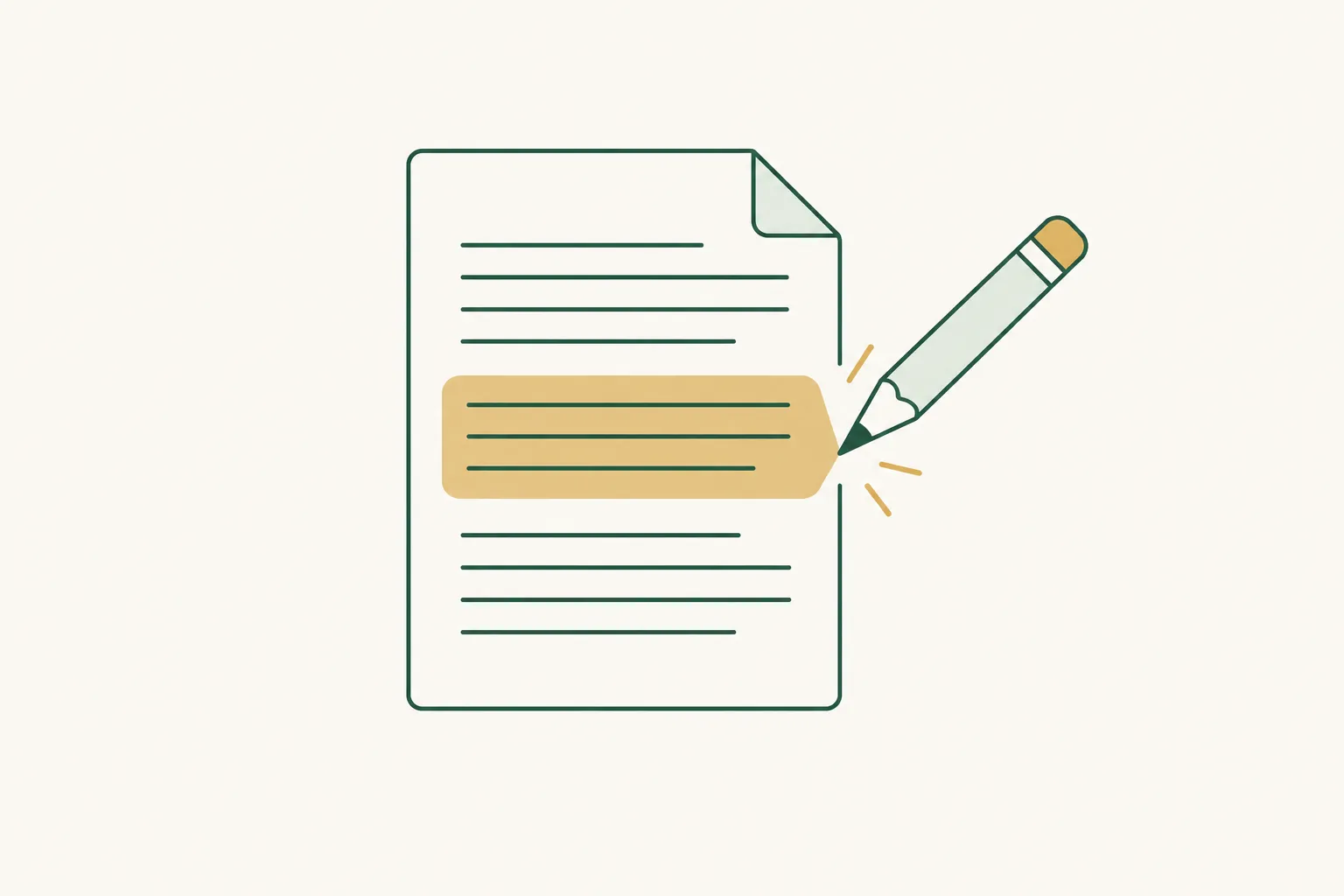 Fix one paragraph. Don’t order another documentInstead of asking AI for a new version of the whole document, I select one paragraph and give one criterion. Why narrow prompts shorten checking.
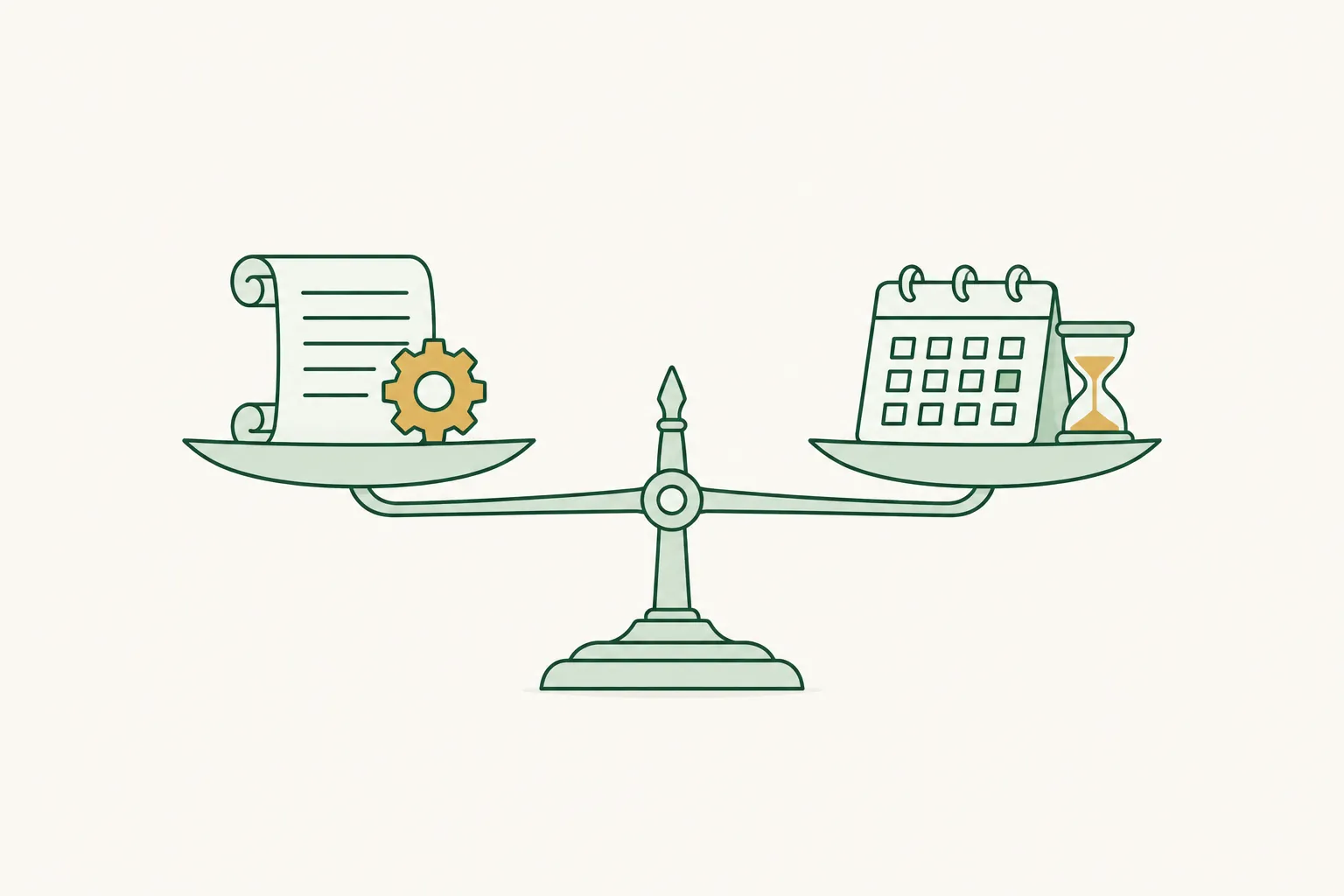 Not every repetitive task needs a skillA skill, a saved procedure for AI, does not always pay off. Four questions I ask before turning a task into a skill.
 I learnt the most about AI by keeping a journalFor several months I kept a daily journal with AI. Why regular work on your own matters teaches you AI better than yet another feature demo.
 “Skill created” does not mean “it works”The message “skill created” proves nothing yet. How I check a saved procedure for AI: a new conversation and three test cases.
 A ready-made prompt wanted to comb my hairA ready-made image prompt wanted me to comb my hair in a Tokyo flat. What reading other people’s prompts before using them teaches me.
 Who actually did the work? On using AI responsibly in a companyA finished AI output does not always mean the work was done well. How do you set rules for using AI that protect your team’s accountability and skills?
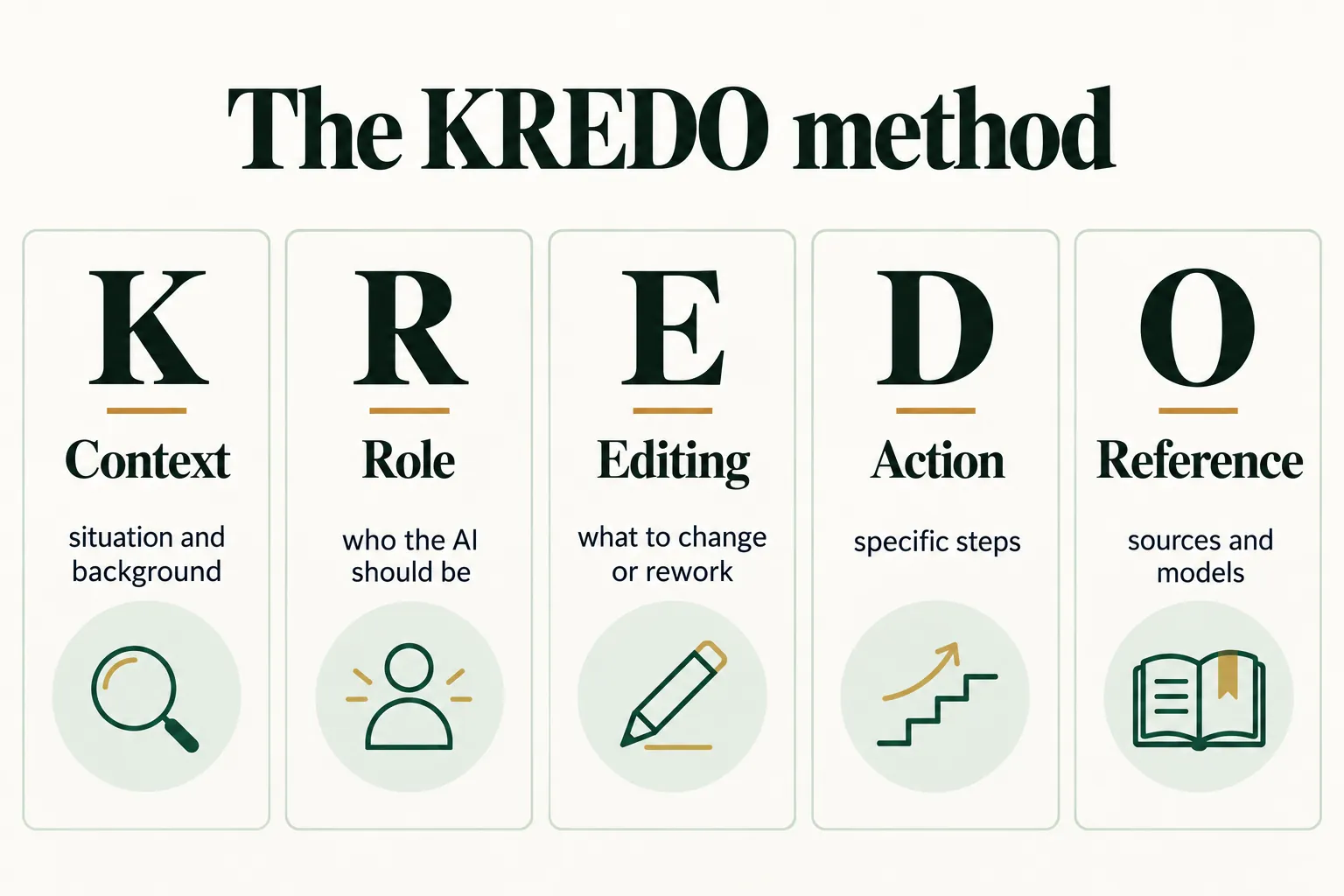 The KREDO method: a new way to write AI promptsKREDO is our own method for building prompts: Context, Role, Editing, Action, Reference. It grew out of hundreds of prompts written during our training sessions.