Not every repetitive task needs a skill
A skill, a saved procedure for AI, does not always pay off. Four questions I ask before turning a task into a skill.
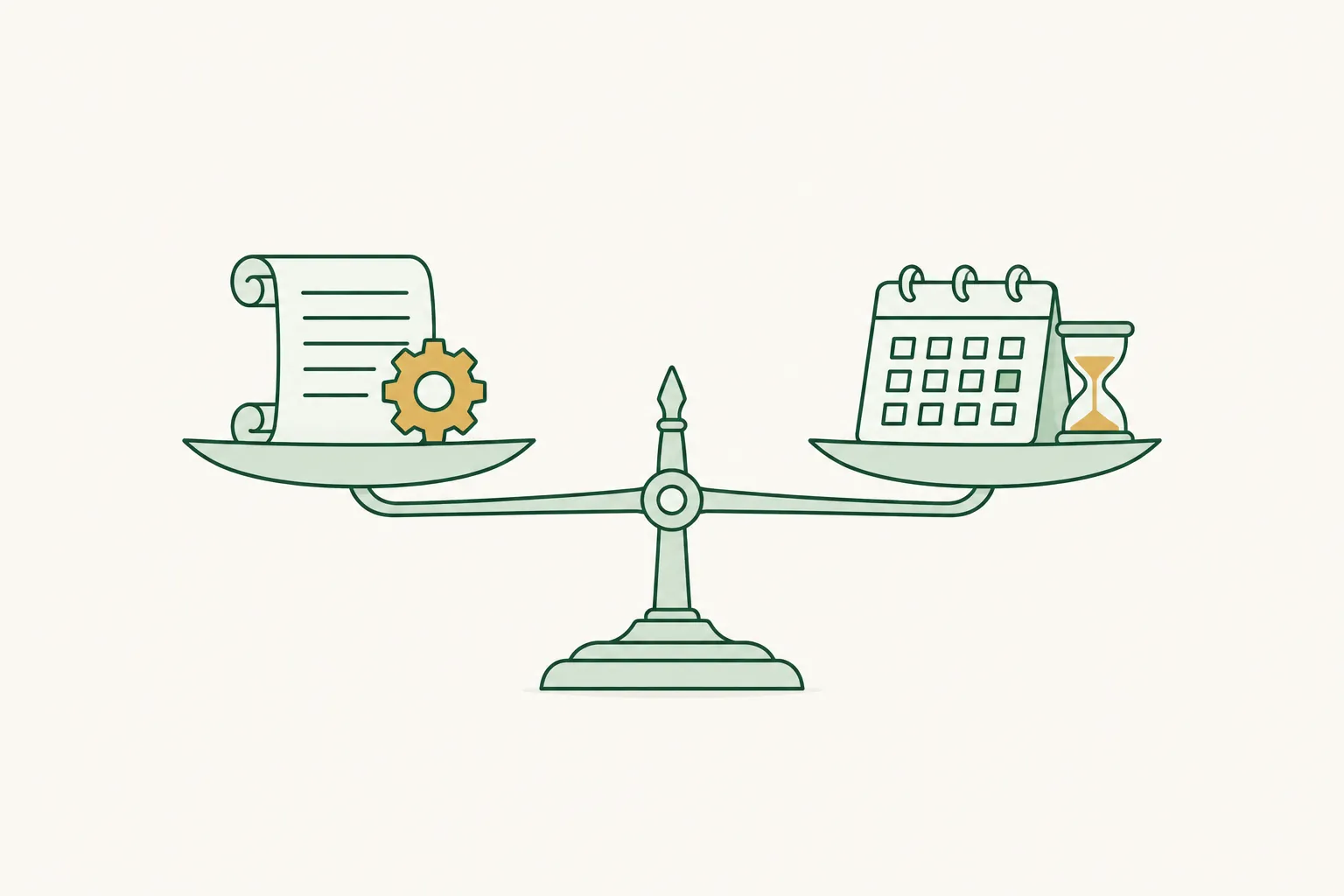
During a training session we discussed when an ordinary prompt is enough for a task and when it is worth preparing a skill, that is a saved working procedure for AI. On one example the answers were split. And both sides could be right.
The fact that a task repeats is not enough to make building a skill worthwhile.
If a report follows a fixed template, writing down the instructions sounds sensible. But the report may be produced once a year. The template may change soon. In six months we may no longer be doing this task at all. Or we may simply forget that the prepared instruction exists.
Such questions are less exciting than building your own assistant, but they decide whether the solution is useful.
When a skill makes sense
A skill makes sense where it lets you reuse an established way of working. For example, after client calls there are notes from which emails have to be prepared. The tone, the structure, the way gaps are handled and the rule about what must not be promised all repeat. The content of the conversation changes every time, but the requirements stay similar.
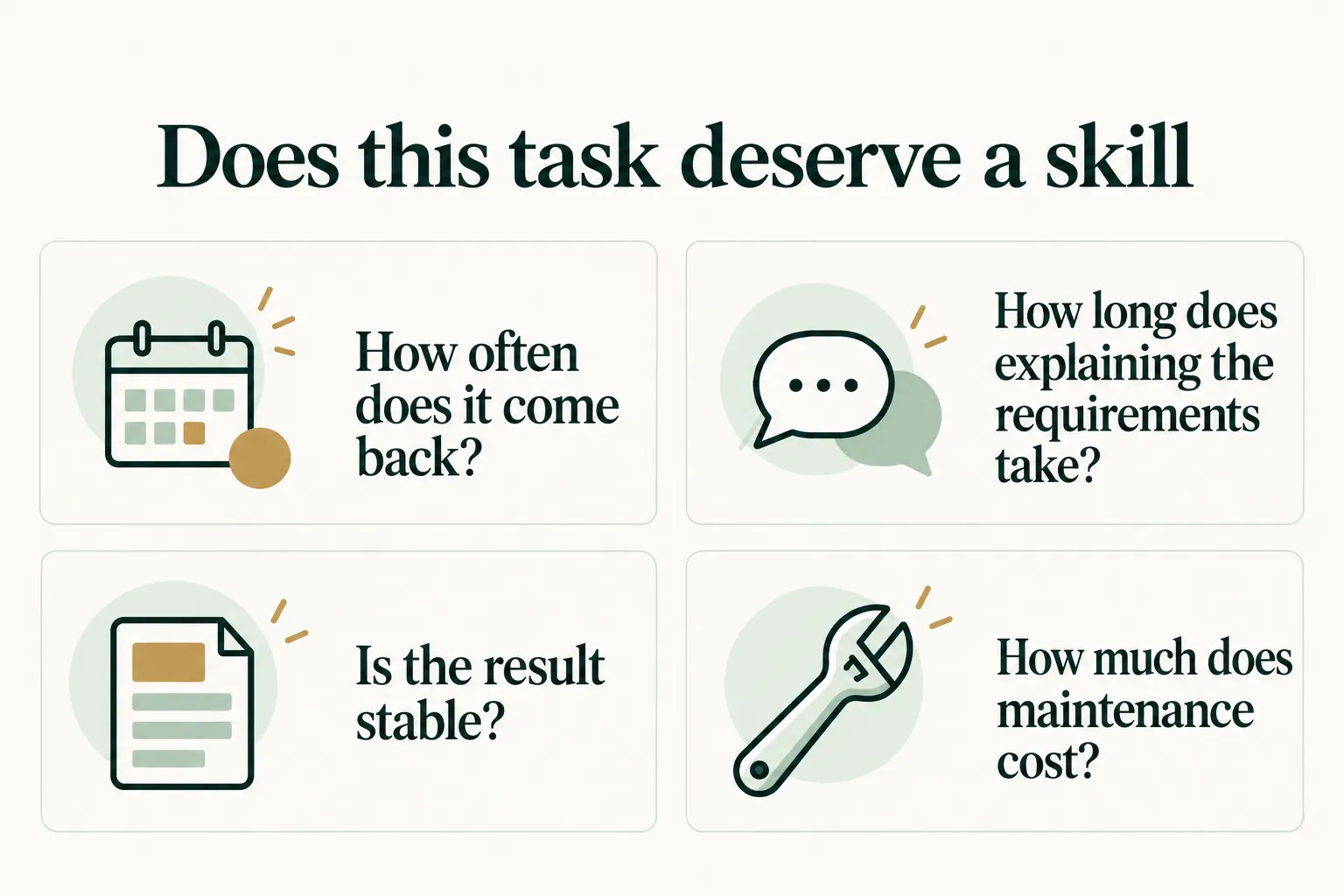
When assessing such a task I would check four things: how often it comes back, how long it takes to explain the requirements again, how stable the expected result is and how much checking and updating the instructions will cost.
A simple calculation
You can work it out very simply. If preparing and testing the solution takes an hour and each use saves five minutes, you need twelve uses just to recover the preparation time. This is an illustration, not a result from my training session. On top of that come corrections, handling exceptions and possible changes to the process.
Not everything has to be automated straight away. Sometimes a short instruction kept in an accessible place is enough. Sometimes it is better to do the task a few times first and find out what really repeats. Saving an ill-thought-out procedure too early can lock the problem in.
At training sessions I use skills because I see many uses for them myself. But their number is not my measure of maturity in working with AI. Much more important is whether a given skill gets used again, gives a predictable result and remains understandable to the person who will maintain it.
What this means for a company
Before a team saves a procedure, it is worth checking how often the task occurs, how stable the requirements are and how much later changes will cost. A one-off task may be quicker to do with an ordinary prompt than to wrap in a separate instruction.
Translated from Polish. Read the original