A ready-made prompt wanted to comb my hair
A ready-made image prompt wanted me to comb my hair in a Tokyo flat. What reading other people’s prompts before using them teaches me.
During a training session I showed a ready-made prompt for creating images. The example showed a girl in a Tokyo flat going about various activities. You could add your own photo and get a similar composition.
A ready-made prompt contains someone else’s assumptions, even if it looks universal.
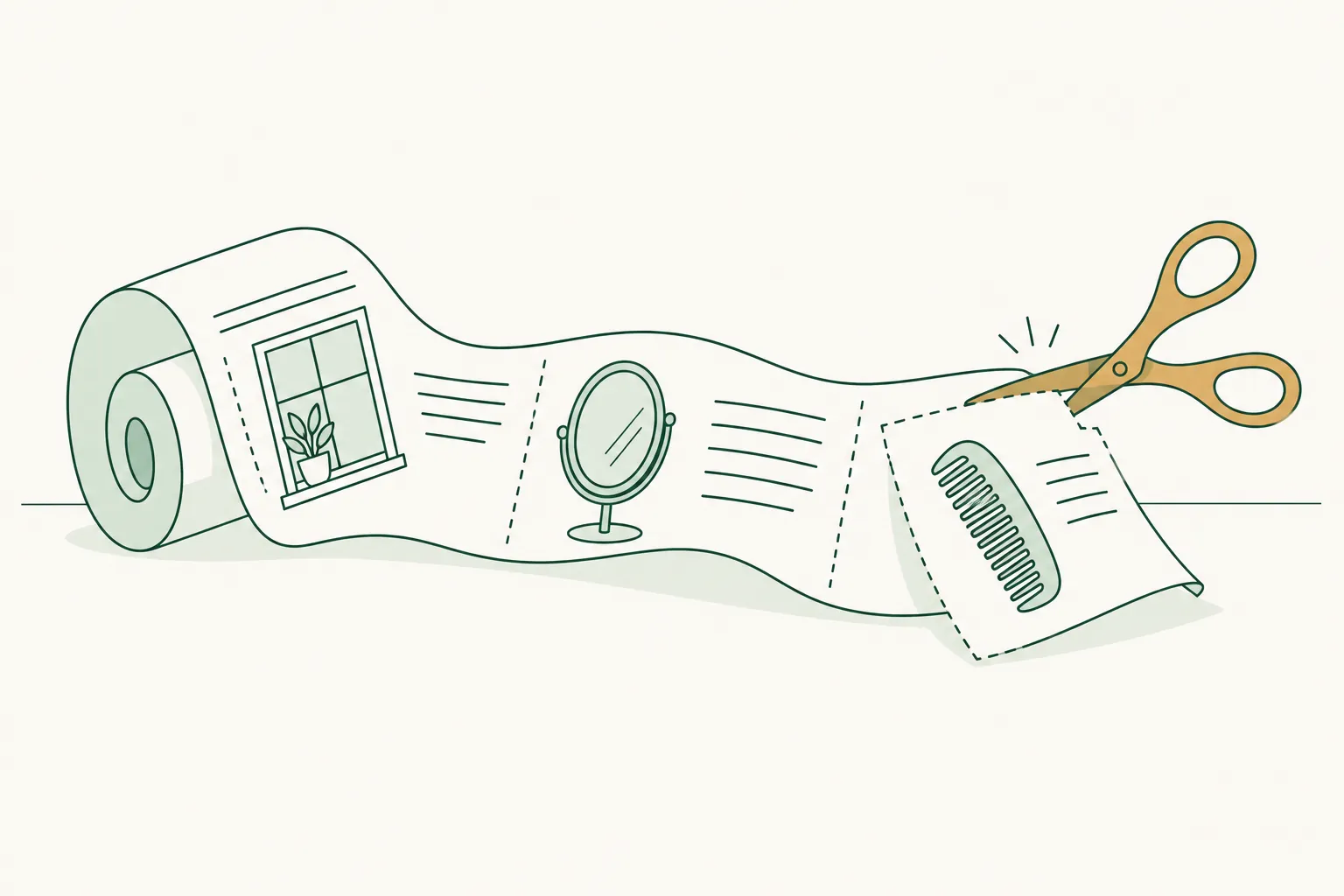
Before using the template, I looked at its content. Among other things it included combing hair. In my case, as I remarked during the session, that would probably require a micro-comb.
Along with the structure, we copy someone else’s situation
It is a funny detail, but it shows well the limits of copying ready-made prompts. Besides a useful structure, we also carry over someone else’s situation, character and assumptions. Sometimes they are visible at once. Sometimes they sit in the middle of a long instruction nobody has read.
In image prompts you can inherit the wrong setting, activities or features of a person this way. In business prompts it can be less amusing: someone else’s target audience, promise, communication style or way of measuring success. A template carried out correctly then gives a result that simply does not fit the task.
Ready-made examples are great for exploring possibilities. They show compositions and uses I would never have thought of. It is worth treating them as material for adaptation, though. First work out which elements produce the effect I want and which belong only to the original example.
How to adapt a ready-made prompt
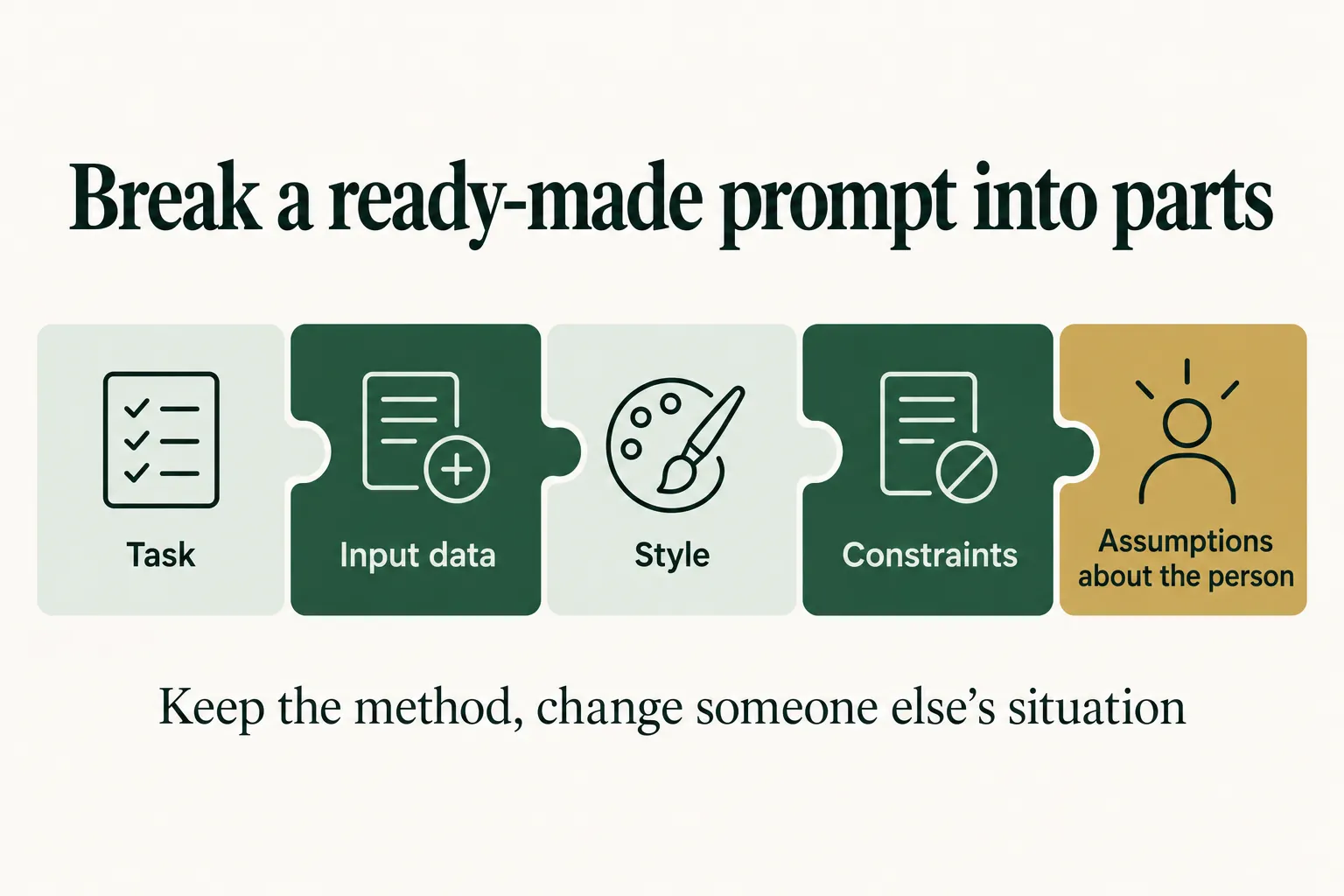
With a long prompt you can ask AI to help break it into parts: the task, the input data, the style, the constraints and the assumptions about the user. Then say what to keep and what to change. A request to “adapt it to me” may be too general if we do not say what is different in our case.
Finally, you have to assess the result. Having used a popular template does not excuse me from noticing that in the image I am doing something absurd or that a text promises a client a service I do not offer.
That is why I encourage using other people’s ideas, but also reading what they contain. In my example a few sentences were enough to see the problem. It is hard to imagine a more personal fit test than a prompt that, in all seriousness, plans a hairstyle for someone who has nothing to style.
What this means for a company
Before a team uses a template, it is worth reviewing the description of the person, the setting, the style and the conditions for using someone’s likeness. One mismatched assumption can make the result striking but useless for the brand.
Translated from Polish. Read the original