Fix one paragraph. Don’t order another document
Instead of asking AI for a new version of the whole document, I select one paragraph and give one criterion. Why narrow prompts shorten checking.
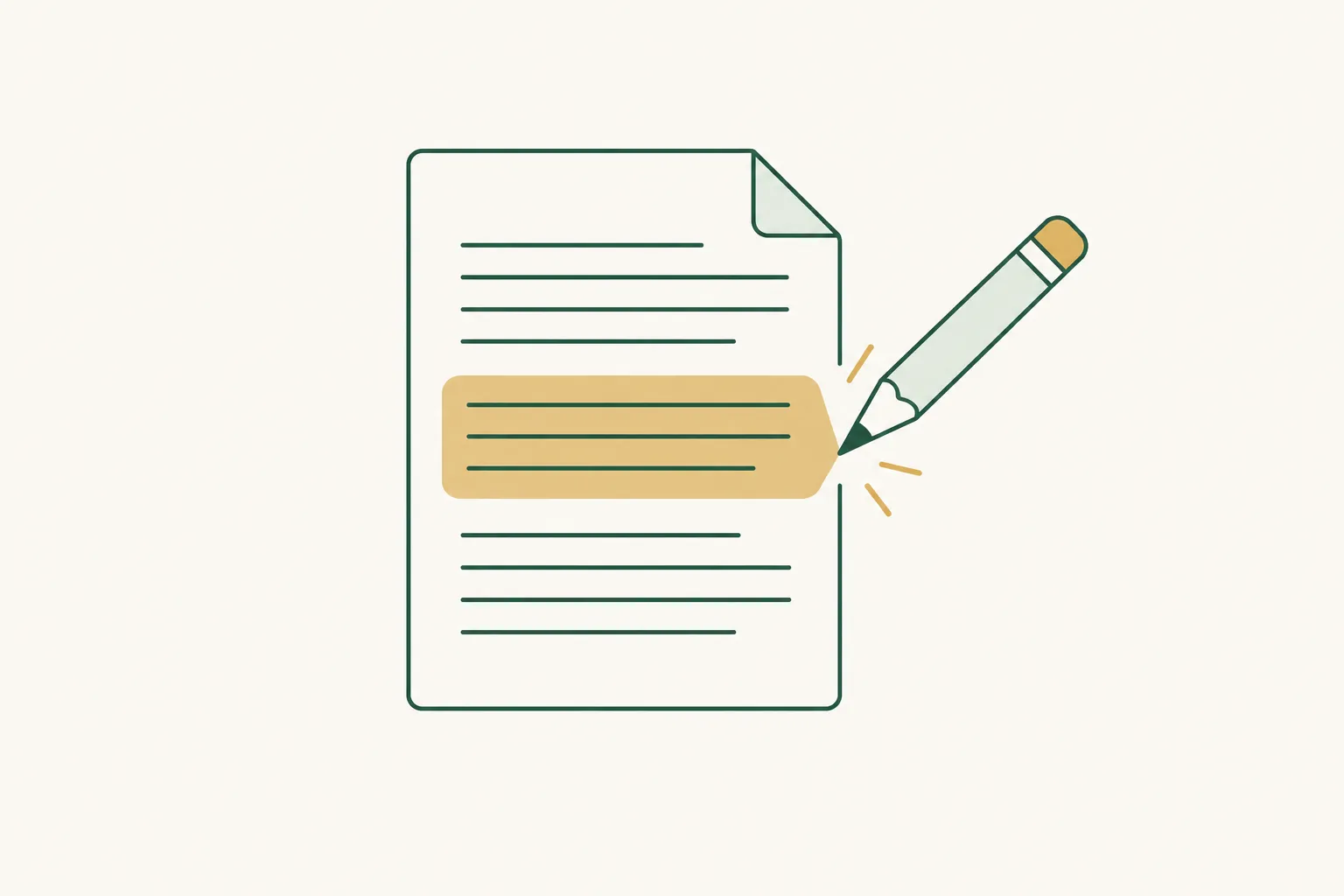
In an exercise on editing text I showed a simple operation: select a passage and ask for it to be shortened or expanded. The rest of the text was to stay unchanged.
The smaller the scope of a change, the less content you have to check again.
It sounds modest next to generating websites, images and reports. But in everyday work this skill is very useful. It lets you move from ordering more versions to editing a specific piece of material.
Why “write it better” is costly
Imagine an offer in which we have already accepted the scope, prices and deadlines. We only dislike the introduction. A general “write it better” leaves a lot of room for change. The model may smooth out the whole text and, along the way, weaken an important reservation or reword a commitment. After such an operation the whole document has to be checked again.
When you point to a passage, the task is narrower. You can say: “Shorten this paragraph to three sentences. Keep all the conditions. Do not add promises”. Then it is easier to compare the result with the instruction and notice whether the meaning has stayed the same.
At the training I showed this in Canvas mode in Gemini: after selecting a passage and asking it to “shorten this passage”, the model changed only that paragraph, and the version history made it possible to compare the result with the previous version. ChatGPT has a similar text editing mode. These features help you control the work, but they do not excuse you from checking the result. An instruction to leave the rest unchanged is still worth verifying.
Three kinds of changes
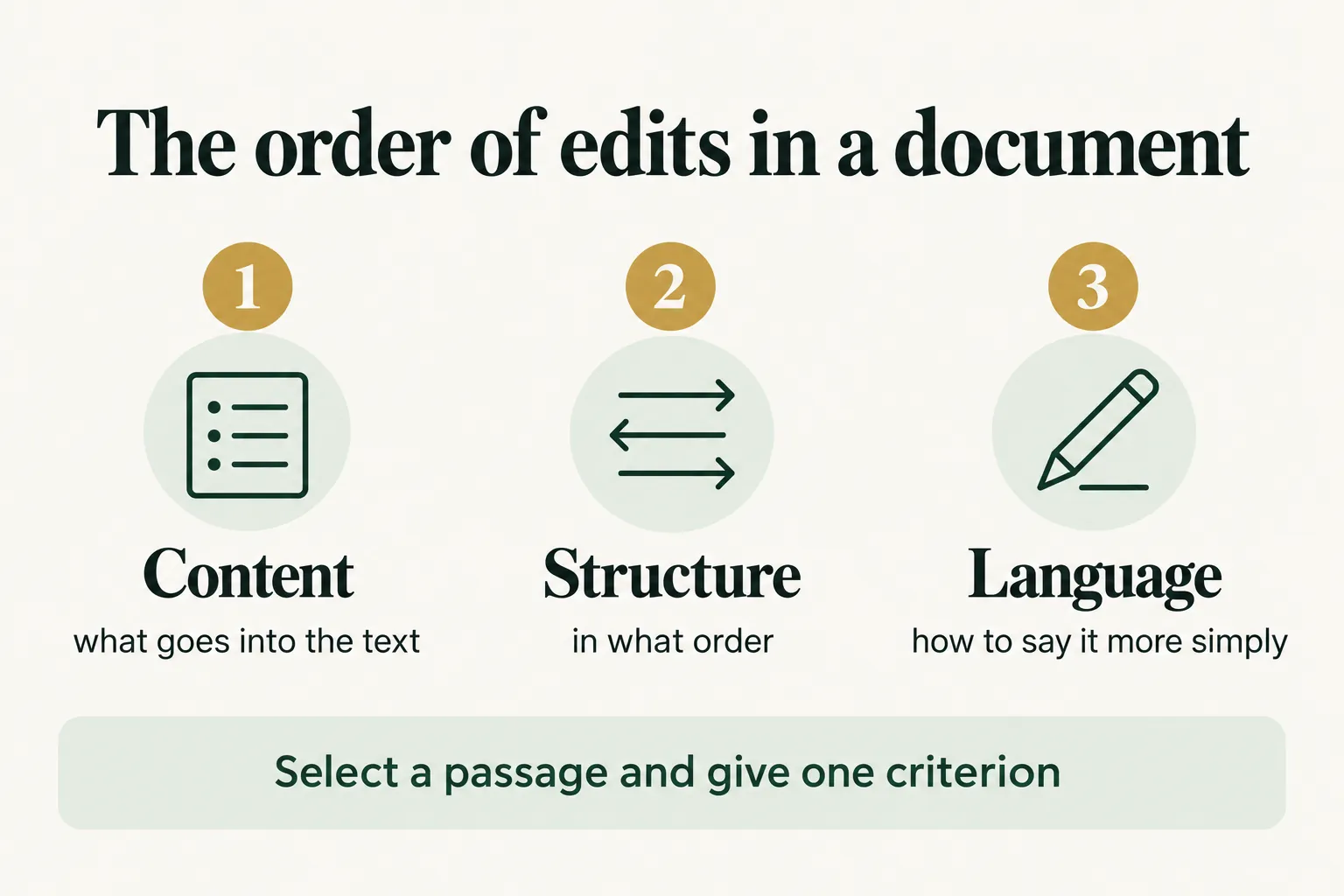
When editing a document I suggest separating three kinds of changes. First content: what should be in the text. Then structure: in what order. Finally language: how to shorten and simplify the sentences. If we resolve every comment by rewriting the whole thing, it is hard to keep control over the approved parts.
It is also important to decide what we consider finished. Once a passage is approved, you can come back to it, but it is worth doing so deliberately. Otherwise each new correction reopens earlier decisions, and the work starts circling around the same document.
At the training it was about a few selected sentences. In practice it is about the scope of delegation: I entrust AI with a specific change and check that it has been carried out. The better I can describe that change, the easier it is to judge whether I got what I needed.
What this means for a company
When editing a document, it is worth pointing to the exact passage to improve and one criterion for the change. After the edit we compare that passage with the original instead of reassessing a whole document generated from scratch.
Translated from Polish. Read the original