Will contact with a human become a premium service?
Automatic doors work well, yet in a better hotel a person opens them. My hypothesis about what customers will pay for in AI-assisted service.
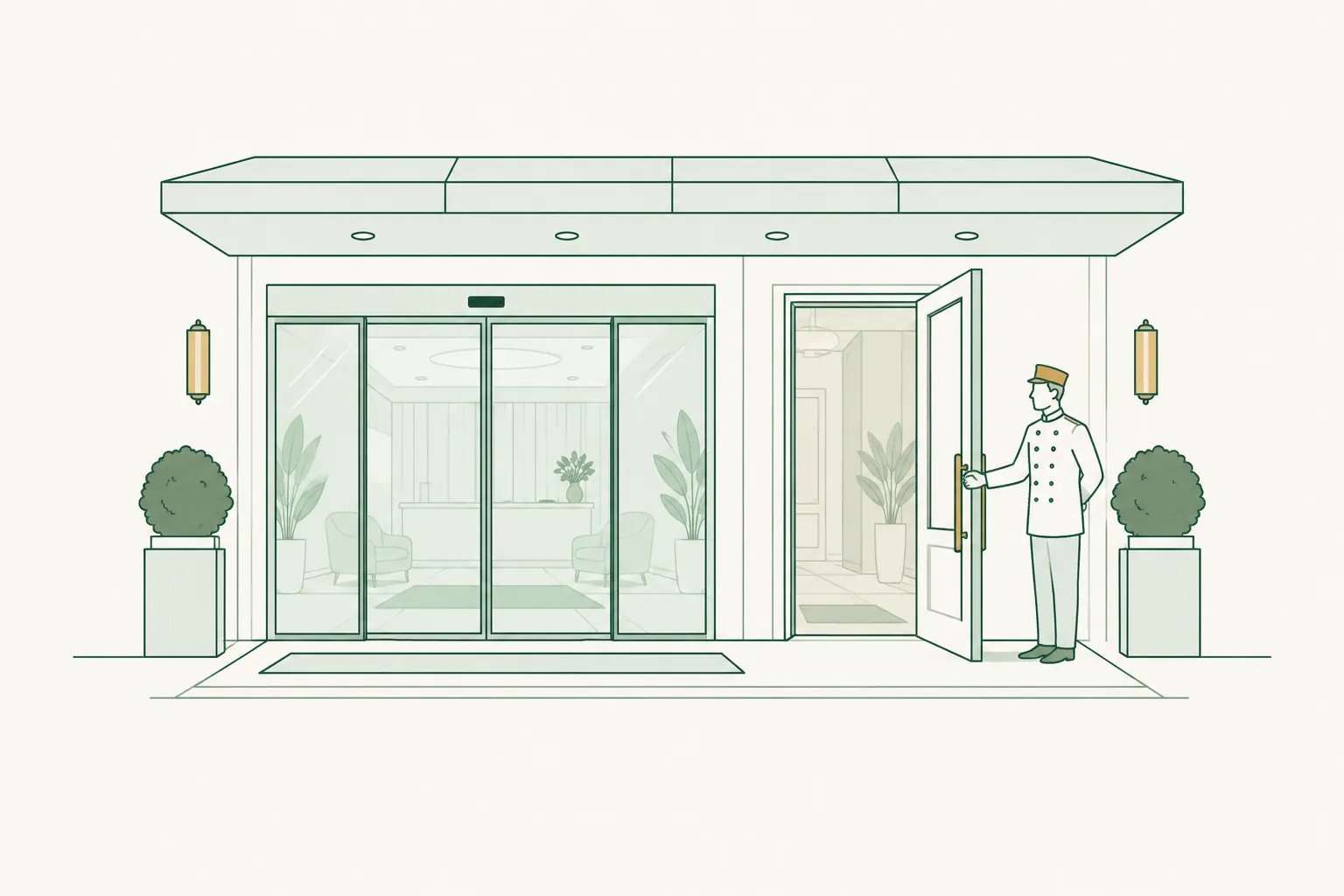
During a training session a comparison with hotel doors came to mind. In a five-star hotel a person opens the door, in a more modest one the doors may open on their own. Automatic doors open efficiently. And yet a person at the entrance can signal a higher standard of service.
Not every service activity has the same value from the customer’s point of view.
I wonder whether we will see a similar mechanism more widely in how companies communicate. As preparing a correct, polite answer becomes easier and easier to automate, it may matter more whether someone has really given our case their attention.
This is a hypothesis, not a forecast backed by my own market research. And it does not apply to every situation. If I want to check the status of a parcel, I prefer a quick, correct answer to the ritual of talking to a person. I do not need a personal conversation for every activity.
When a customer needs a person
An unusual, contentious or important case is different. Then, besides an answer, you often need to know who can make a decision, accept an exception and be responsible for the next steps. An empathetic-sounding message does not provide any of these.
Hence my question about the future standard of service: what will customers be willing to pay extra for? Perhaps for the mere fact that a person wrote the text. Or perhaps for a specific person having read the case, having the authority to act and not passing the customer on to the next form.
The second option is closer to my view. A thoughtless reply written by hand does not become valuable just because of how it was produced. On the other hand, a reply prepared with AI can be very good if a person has checked the content and takes responsibility for what it says.
Where automation should hand the case over
That is why, when designing customer service, it is worth defining the moments when automation should pass the case on. For example, when data is missing, the standard procedure does not fit or the customer challenges an earlier decision. A “talk to an agent” button is of little use if nobody on the other side can help.
For me the hotel analogy is a starting point for this discussion. Technology can handle many activities. It is still worth asking at which moments the customer wants to be sure that someone is really dealing with their case. That is where room for a premium service may appear.
What this means for a company
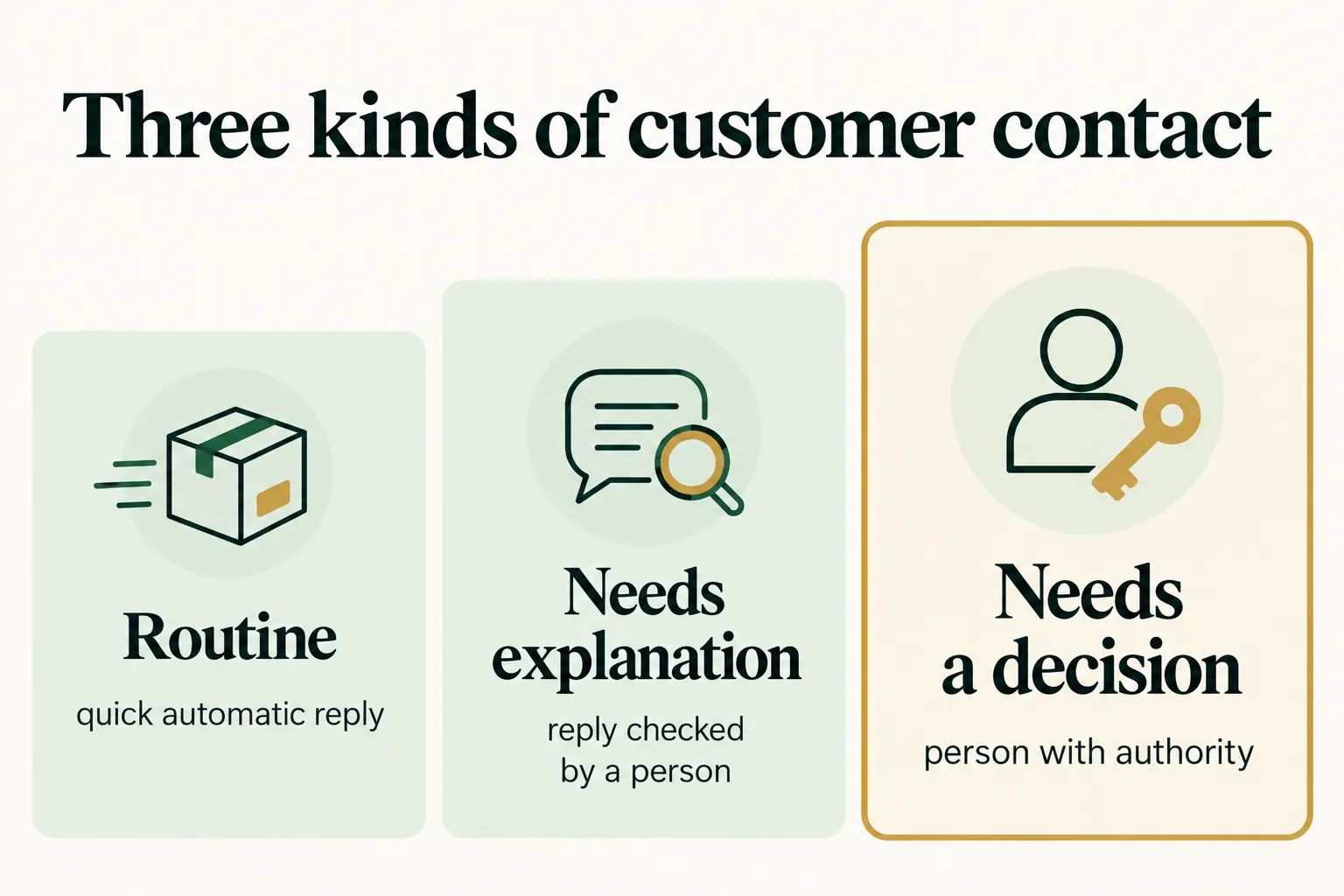
A good exercise for a company is to divide contacts into routine ones, those that need explanation and those that need a responsible decision. Only then can you decide where automation really improves service and where the customer should easily reach a person.
Translated from Polish. Read the original