I built an integration because attachments annoyed me
My email plug-in could not handle attachments, so with AI’s help I built my own MCP server. Where to start with automation in a company.
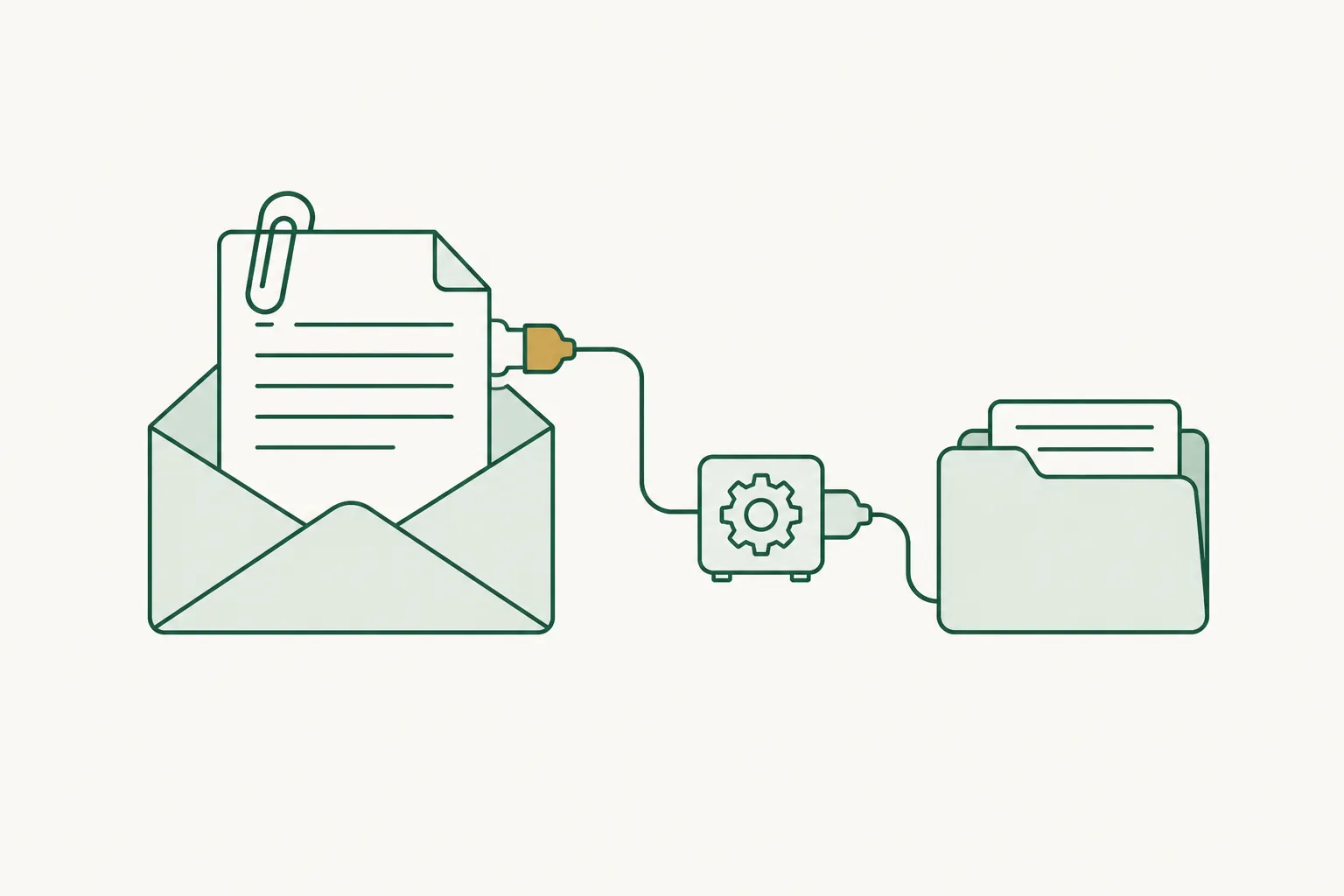
The email integration I was using did not handle attachments the way I needed. I could work with some of the information, but for files I still had to go back to the inbox and do extra steps by hand.
It is worth starting an integration with a specific obstacle in your work.
It annoyed me. So, with the help of AI, I built my own MCP server that let me download attachments, process them and attach them to messages again. That is how I described it during the training: the starting point was a concrete obstacle in my work.
What an MCP server is
MCP, or Model Context Protocol, is a standard for communication between AI applications and external tools and data. An MCP server can expose specific operations. Put simply, it gives the assistant a way of carrying out an action it could previously only talk about. The protocol itself does not decide whether carrying out that action is appropriate or safe.
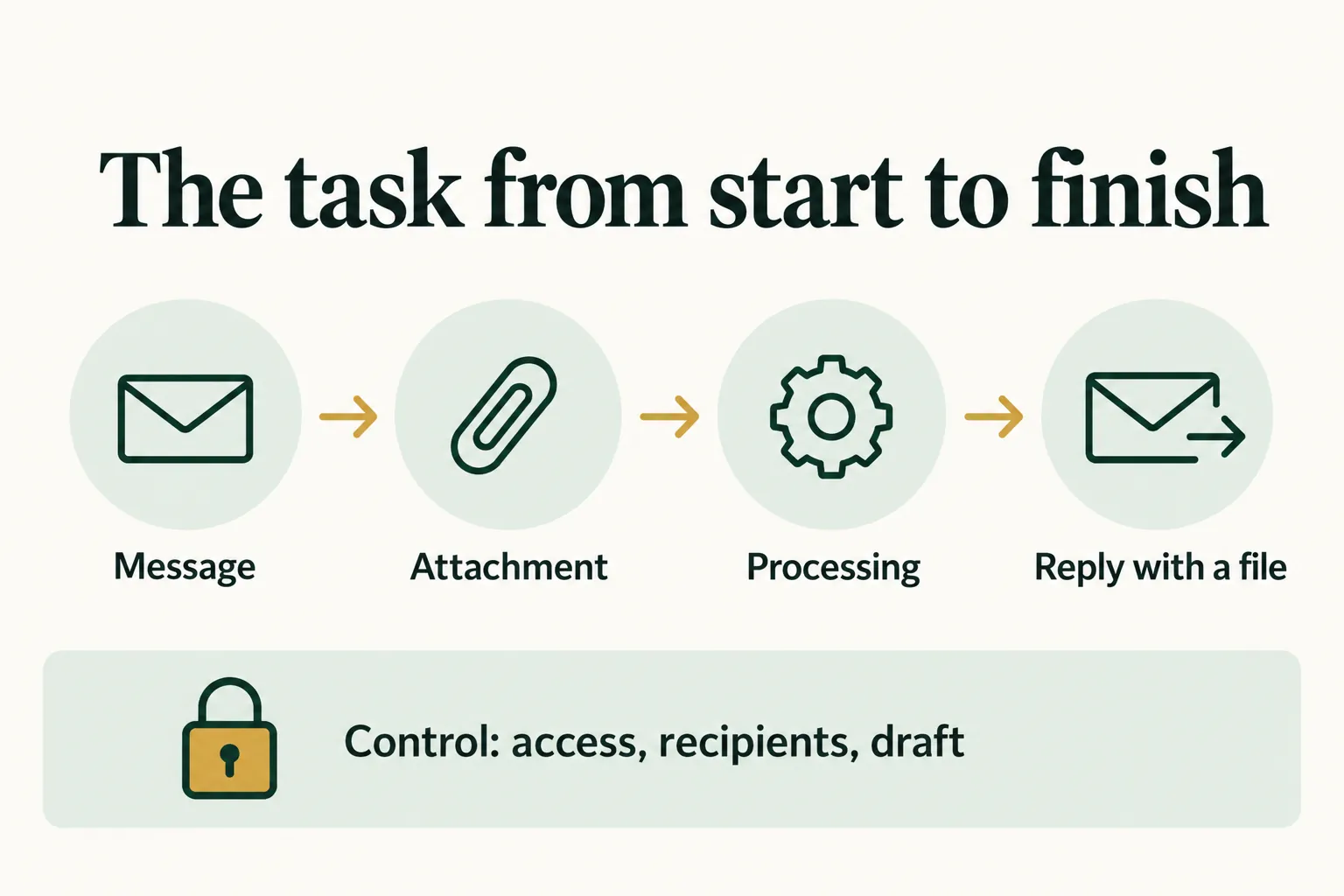
What mattered in my case was the whole course of the task. A message arrives, it contains a file, something has to be filled in or changed based on the information, and a reply has to be prepared. If AI helps only in the middle and I still handle the rest manually, part of the benefit disappears in switching windows and moving data around.
Process first, integration second
That is why, before I choose another integration, it is worth mapping the process from start to finish: what triggers the task, where the data comes from, what file is to be produced, who checks it and where it should go. Then you can see whether the problem is the quality of the answers or simply the lack of a connection between applications.
A technical prototype is not the end of the work, though. With email you have to control access, recipients and write operations. Being able to download an attachment should not mean being free to send files anywhere. A sensible first test uses test data, limited permissions and drafts prepared for checking.
My story is not a promise that anyone can safely build any integration in two hours. What it does show is that it pays to start with a well-named problem. Attachments were a repetitive enough nuisance for me to look for a solution. That is a much more concrete start to a project than just “we want to implement an AI agent”.
What this means for a company
Before ordering an integration, it is worth describing one sequence of actions: what an employee has to open, copy and check today, and which step should disappear. Defining access to data and how the solution will be tested is just as important.
Sources: MCP architecture, authorisation security requirements.
Translated from Polish. Read the original